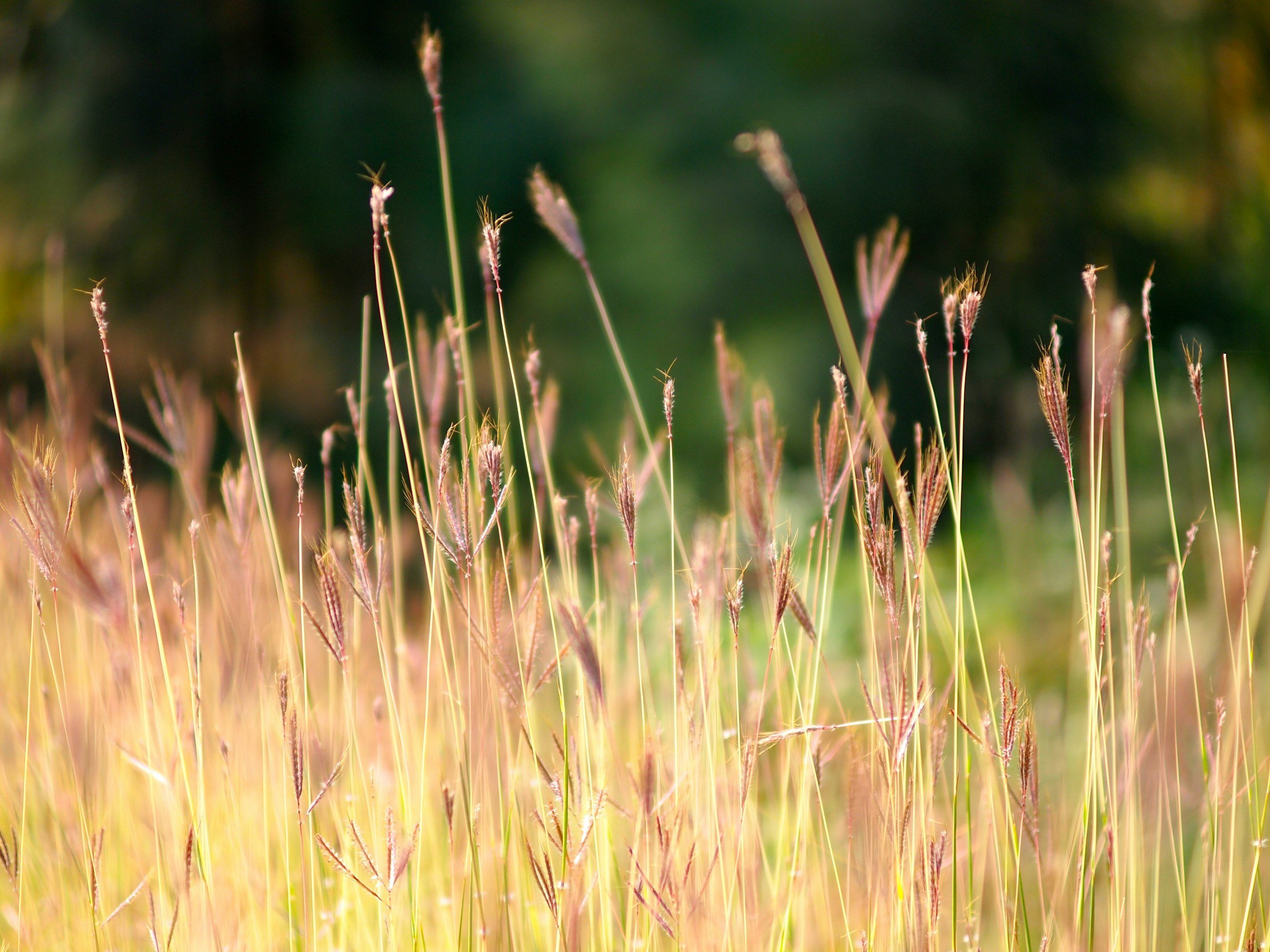
They Met in the Tall Grass
She first met her in the tall grass behind her family’s new home.
She was a young girl about her age. She sported the same haircut, the blunt, bowl-like bangs. She even had the same almond-shaped eyes, the same round cheeks and pointed chin. This strange new girl seemed somewhat familiar, but it would've been impossible to know her: they were brand-new in town.
But she needed a friend. And the young girl with the uncannily familiar face opened her slender arms in welcome—and, as young children are wont to do, they did not question. They played for hours in the field. They ran in circles, stirred the grass stalks, and caused puffs of pollen to swirl and twirl and dance in the air. They played until the strange sun turned the backs of their necks as brown and crisp as lechon skin.
And she was saddened to have to leave her new friend. But she had promised Mama that she would return before sundown. Mama needed her to cook the rice to accompany that night's ulam.
"Don't worry," the little girl declared. The little girl grabbed her hand and squeezed their little brown palms together with enough affection to nearly shatter her heart. "I'll be here."
But after that long afternoon frolicking in the tall grass, after that first night when they ate steamed rice and Mama’s tooth-biting sinigang at their old dining table in their new dining room, she never saw her again.
And she quickly realized that she needed her, her strangely familiar friend whom she met in the tall grass. She needed her when she finally went to school and discovered that the other little kids poked her flat nose and slanted their eyes and babbled nonsense sounds as she sat at her desk. She needed her when the kids in the cafeteria gagged at the baon—the crisped rice scraped from the bottom of the pot, the leftover fish with its oily skin, the sliced banana lovingly placed by Mama—she produced at lunchtime. She needed her friend when the teacher spoke so slowly to her, enunciated her words as if she dragged them through sweetened condensed milk, and made her feel like her brain wasn't wired right.
And as those first few weeks in that strange new town turned into months, then years, she continued to need her: that friend she met in the tall grass. She needed her friend as she learned survival skills, as she shed burdensome qualities that tied her to a place that held significance yet no longer could.
She eventually lost her mother tongue. She learned to throw away her offensive lunch and to bring pocket money to buy acceptable food—white bread sandwiches, macaroni and cheese, hamburgers on potato buns—from the cafeteria. She stayed out of the sun to prevent her brown skin from becoming browner. She saved up her allowance to buy her own clothes, to buy eyeliner so she could copy the makeup looks in her classmates’ magazines—the ones that promised to make her almond eyes look bigger, rounder. She refused to invite anyone over to her family’s home, despite Mama and Papa’s curiosity and hospitality, because she refused to explain to any of her would-be friends why her house smelled the way it did or what TFC was.
On this day, she comes across a sour-looking man at the mall, who cruelly bumps into her and spits out “chink.” And, at this moment, she desperately, desperately longs for her friend: the one who promised that she’d be there yet abandoned her when she needed her the most; the only person in this godforsaken place who had welcomed her and loved her, no explanations required, yet disappeared when love and welcome had seemingly dried up.
After this run-in at the mall, her soul feels heavy. She is shaken. Distracted. Hurt. Her meandering feet eventually bring her back to the undulating grass behind her parents’ home, nearly ten years since she and her family first attempted to establish roots in this horrid town.
She stops at the edge of the grassy field. Her heart drops. Because she sees her: the same bowl-like bangs, the same almond-shaped eyes. So much time has passed, but the young girl—her friend—hasn’t aged a day. Despite the impossibility, she knows in her soul: it’s her.
She means to run through the stalks. But her legs fail her.
She falls to her knees and sobs.
“Where have you been all this time?” she implores. She wraps her arms around herself. “It’s been so hard. I’ve been so alone. I needed you.”
Her friend approaches her. The tall grass sways, and the pollen dances in swirls and twirls. Her friend runs her little brown palm through her hair, then across her face. She wipes away her tears.
“I was always right here,” she whispers. “I don’t think you were looking closely enough.
—
Originally written on Dec. 30, 2024